


The Ancient Houses of Hoi An: Three Merchant Homes Still Telling Their Stories
📋 Table of Contents
Hoi An and the Ancient Houses That Tell Stories
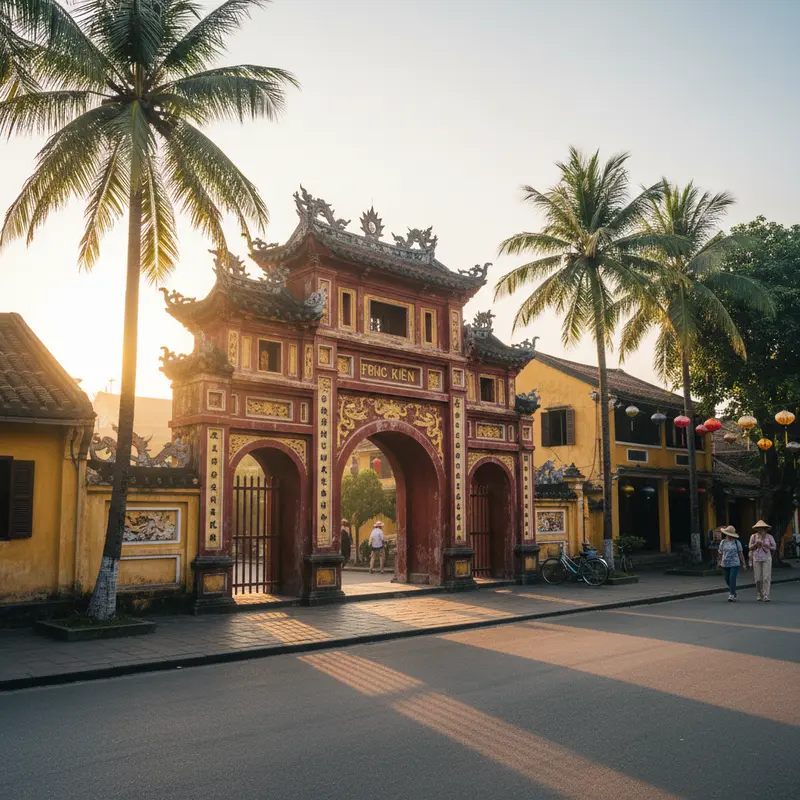
There was a morning I wandered into Hoi An’s old town when daylight hadn’t fully broken yet, when the red lanterns were still glimmering through thin mist, when street vendors were arranging their goods for the day — and I realized that Hoi An’s beauty isn’t just about colors or lantern light. Hoi An is beautiful because it breathes. Every moss-covered wall, every glossy brown wooden window frame, every yin-yang tile roof covered in lush green ferns is whispering stories spanning hundreds of years.
Among the hundreds of structures recognized by UNESCO in the old town quarter, the 3 most beautiful ancient houses in Hoi An are mentioned most often — and most deservedly — namely Tan Ky Ancient House, Phung Hung Ancient House, and Duc An Ancient House. These aren’t ordinary tourist attractions. These are three “living witnesses” to an international trading port that was once one of Southeast Asia’s most bustling in the 17th-18th centuries, where Japanese, Chinese, Vietnamese, and Western merchants traded together, built together, and left behind unmistakable architectural imprints.
If you’re planning to explore Hoi An and can only choose a few spots to visit, then this article — written by someone who has walked through the old town hundreds of times — will be a practical guide to help you experience it most fully.
Overview of Hoi An Old Town and Its Ancient House System
Why Are Hoi An’s Ancient Houses So Special?
Before diving into each specific house, I want you to understand one thing: Hoi An’s ancient houses are not reconstructed museums. These are houses being lived in, being breathed in, being cared for by families who have passed them down through 7-8 generations. When you step inside, you’re not viewing artifacts — you’re being invited into the private space of a family clan.
Hoi An’s ancient architecture is a unique blend of at least three cultures:
- Traditional Vietnamese Architecture: Yin-yang tile roofs, wooden beam systems using jackfruit wood, courtyards (sky wells) for natural light.
- Japanese Architecture: Rainbow-shaped roofs (choshi), distinctive beam systems, open and airy spaces.
- Southern Chinese Architecture (Fujian, Guangdong): Ancestor altars placed centrally, ceramic and porcelain decorations, stylized climbing vine patterns.
What I love most is how these houses are built in the “tube house” style — long and narrow from the street front extending back to the alley, sometimes 40-50 meters long, yet with interspersed courtyards for light and ventilation. This is an extremely clever architectural solution for the humid tropical climate of Central Vietnam.
Admission Tickets and How to Buy
To visit the ancient houses in Hoi An’s old town, you need to buy old town admission tickets at official ticket booths (don’t buy from street touts). Tickets cost 144,000 VND (≈$6)/person (as of this article’s publication), including the right to visit certain designated sites of your choice.
[!NOTE] Hoi An old town tickets allow you to choose to visit certain fixed sites on the list. Tan Ky, Phung Hung, and Duc An are all on this list. Plan ahead to maximize your ticket — don’t waste it!
Tan Ky Ancient House – A 200-Year-Old Masterpiece of the Old Town
History and Family Origins
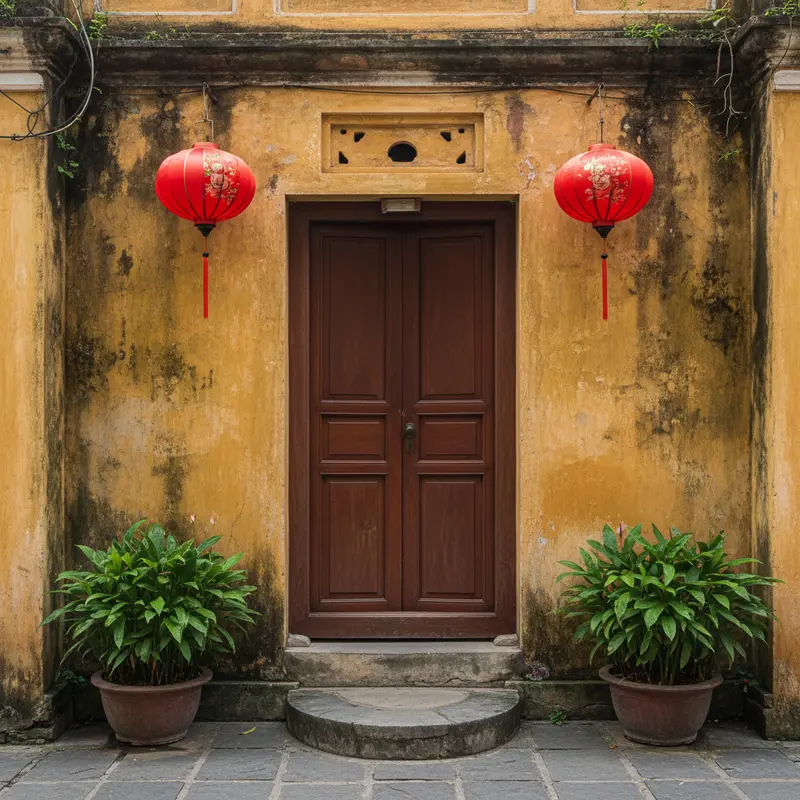
Tan Ky Ancient House is located at 101 Nguyen Thai Hoc Street, in the heart of Hoi An’s old town. The house was built around the late 18th century (meaning it’s over 200 years old) by a Vietnamese family of Chinese descent engaged in commerce. The name “Tan Ky” was originally the family’s business name, meaning “new and reliable” — reflecting the entrepreneurial spirit of a successful merchant of that era.
What few guidebooks mention: this house is currently home to the 7th generation of the Le family. When you step inside, you might meet an elderly woman selling souvenirs in a corner — she’s not a museum employee, but an actual family member. This detail gives me chills every time I visit.
Architecture – Where Three Cultures Meet
Tan Ky is the perfect example of Vietnamese-Chinese-Japanese architectural fusion in Hoi An. The house is about 18 meters long and 4 meters wide, divided into multiple functional areas connected in sequence:
Front Hall (Storefront): Where goods were displayed and sold in the old days. The wooden door system is ingeniously removable — open during the day for commerce, closed at night into a solid wall. This is an extremely clever building technique of the ancients.
Sky Well (Courtyard): A small courtyard in the middle of the house, planted with ornamental plants, with a small water basin. This is the “lung” of the house, allowing air circulation and natural light to reach the back rooms.
Back Hall: Where the family lived and worshipped ancestors. The altar here is intricately carved with patterns of bats, plum blossoms, and the character for longevity — all carrying the meaning of fortune-prosperity-longevity in Chinese philosophy.
What I especially love is the jackfruit wood beam system on the ceiling. Jackfruit wood is not only durable but also emits a light fragrance, and according to locals, it’s a natural “insect repellent” — a preservation secret passed down by ancestors. On the beams, you’ll see Tang Dynasty poems carved in Chinese characters — showing the education level and aesthetics of the owner.
”Insider” Details That Tour Guides Don’t Mention
When standing in the courtyard looking up, pay attention to the transparent glass roof — this was added in the 20th century to protect the interior from rain while maintaining the natural lighting function. An interesting compromise between preservation and practicality.
Also, notice the flood marks on the walls — lines recording water levels from past floods. Hoi An sits in a low-lying area, and Tan Ky has survived dozens of historical floods. Those marks aren’t decoration — they’re the collective memory of an entire region.
[!TIP] Visit Tan Ky early in the morning (before 8am) to avoid crowds. Morning light streaming through the sky well creates beautiful golden rays perfect for photography. This is the “golden hour” that professional photographers prefer.
Phung Hung Ancient House – The Perfect Architectural Fusion House
History and the Meaning of Its Name
Phung Hung Ancient House is located at 4 Nguyen Thi Minh Khai Street, near the Japanese Bridge (Chua Cau) — Hoi An’s most iconic landmark. The house was built around 1780, making it even older than Tan Ky, and has been home to 8 generations of the Phung family.
The name “Phung Hung” is that of a Vietnamese national hero from the 8th century — showing that the house owner, despite Chinese roots, had fully integrated and taken pride in Vietnamese culture. This is a historically significant detail about cultural exchange in Hoi An.
Two-Story Architecture – The Most Unique in the Old Town
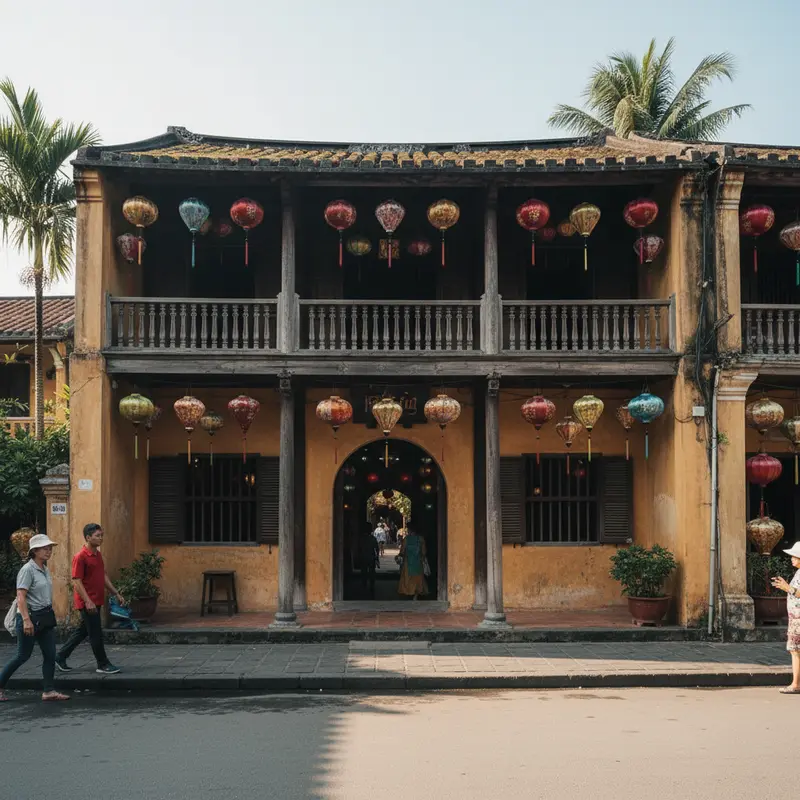
If Tan Ky is famous for its refinement, Phung Hung is famous for scale and grandeur. It’s one of the few completely intact two-story ancient houses in Hoi An, with an area of 4 sections and 2 wings.
What amazes me every visit is the second-floor wooden balcony — carved with climbing vine patterns, chrysanthemums, and plum blossoms extremely finely. From this balcony, you can look down at Nguyen Thi Minh Khai Street and feel what a wealthy merchant felt observing the flow of people below — a true “time travel” experience.
The wooden column system of Phung Hung is an unmissable architectural highlight. There are a total of 80 large wooden columns supporting the entire structure, all made of solid jackfruit wood, using no metal nails or screws — only traditional mortise and tenon joinery. After over 240 years, these wooden columns still stand firm, glossy and fragrant with the scent of precious wood.
Upper Floor – The Secret Viewpoint of the Old Town
Here’s a detail that 90% of tourists miss: you can ask permission to go up to the second floor of Phung Hung. From here, looking back you see the Hoai River area and the old rooftops — a wonderful photo spot that not everyone knows about.
The second floor was historically used as a warehouse — storing goods during flood season when the first floor was submerged. This shows how ingeniously the people of Hoi An adapted to harsh natural conditions.
[!WARNING] The wooden floor of Phung Hung’s second story is quite old and may have weak spots. Walk gently and don’t jump or step heavily. This is a national heritage site, please be respectful!
Carved Patterns and Symbols on Beams
An interesting detail that local guides often mention: the carved patterns in Phung Hung follow the theme of “Four Gentlemen” — pine, chrysanthemum, bamboo, plum — representing the four seasons and four virtues of a gentleman. This shows clear Confucian influence in the architecture and interior decoration of Chinese people in Hoi An.
Additionally, on window frames you’ll see carp transforming into dragons — a symbol of advancement and business success. This is the “architectural prayer” of the house owner, embedded in every smallest detail of the house.
Duc An Ancient House – The Hidden Gem in the Heart of Town
The Least Known House – But the Most Profound
If Tan Ky is the “star” and Phung Hung is the “giant,” then Duc An is the “hidden gem” — least mentioned of the three houses, but leaving the deepest impression on those who truly love history.
Duc An Ancient House is located at 129 Tran Phu Street — the main street and also the oldest street in Hoi An. The house was built around the early 19th century, originally as a traditional Chinese medicine shop of a Fujian Chinese family.
What’s special about Duc An is that it’s the least commercialized of the three houses. When I first stepped in, my first impression was the scent of agarwood — not from burning incense, but from the smell accumulated over hundreds of years of ancestor worship soaked into wood, walls, and air. This is a scent you cannot find anywhere else.
Architecture and Antique Collection
Duc An is smaller than the other two houses, but the density of antiques is much greater. The house currently preserves:
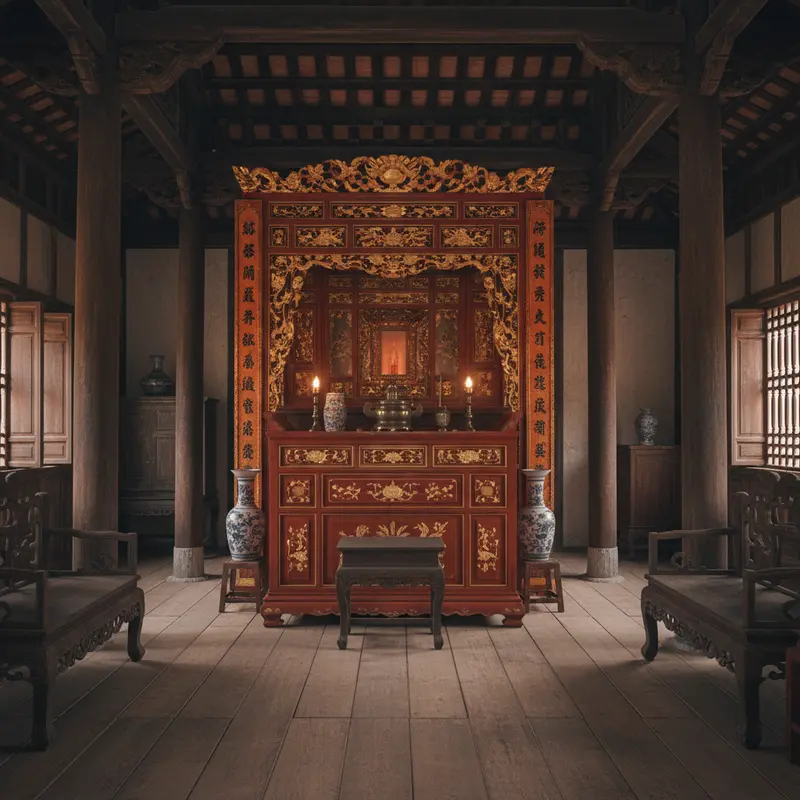
- A traditional Chinese medicine cabinet made of rosewood with hundreds of small drawers, each labeled with Chinese characters indicating the medicine name — an original artifact from when the shop was operating.
- A set of rosewood furniture from the 19th century, carved with intricate dragon and phoenix patterns.
- A set of brass oil lamps hanging from the beams — these lamps once burned peanut oil for light.
- A gilded wooden plaque with Chinese characters on the ancestor altar, reading “De Liu Zi Sun” (Virtue passes to descendants).
Little-Known Historical Story
According to the house owner (I had a chance to chat during one visit), during the French resistance period, Duc An house served as a secret liaison base for the local patriotic movement. Documents and leaflets were hidden in the medicine cabinet drawers — the last place French soldiers would suspect. This is a second historical layer, overlapping the commercial history, making Duc An more special than any other house.
[!NOTE] Duc An Ancient House is usually less crowded than Tan Ky and Phung Hung. This is an advantage for you to observe more carefully, take photos more freely, and possibly chat with the owner if they’re present. Hoi An people are very friendly and love telling stories about their families.
Travel Guide to Hoi An – Don’t Let Your Trip Start with Worry

From Da Nang to Hoi An – Distance and Options
Hoi An is about 30km from central Da Nang, usually taking 45-60 minutes depending on traffic conditions. This distance isn’t too long, but for first-time visitors, it can become a “nightmare” if you choose the wrong transportation.
I’ve seen too many tourists overpriced by unmetered taxis, have Grab drivers cancel mid-trip, or worse, board unmarked vehicles. Hoi An is an international tourist destination, and unfortunately, that also attracts opportunists.
Why Choose Faifo Express?
The most sincere advice I can give: book a car with Faifo Express — a professional shuttle service that I and many friends have used many times.
Specific reasons:
1. Local drivers who know the terrain: Faifo Express drivers are all locals who understand every road, every parking spot closest to the old town (vehicles cannot enter the old town). They’ll show you exactly where to park, which entrance to use — saving at least 30 minutes of wandering.
2. All-inclusive service, fixed price: No “extra charges” or unexpected surcharges. You know exactly how much you’ll pay when you book.
3. Safety and punctuality: Vehicles have GPS tracking, drivers are professionally trained, especially important if you’re traveling with family or children.
4. Flexible itinerary: You can combine multiple destinations in one day — visit ancient houses in the morning, visit Tra Que vegetable village in the afternoon, return to Da Nang in the evening — all in one single car trip.
If you fly into Da Nang, Faifo Express’s Da Nang airport shuttle service will pick you up right at the exit, no waiting or haggling. And if you want to add Ba Na Hills to your itinerary, Faifo Express also has special car packages for this destination.
[!TIP] Book at least 1 day in advance, especially during peak season (April-August and Tet holidays). Faifo Express can run out of cars if you book too last-minute. Contact via website or hotline for the best itinerary consultation.
Notes When Moving Around the Old Town
Motor vehicles are not allowed in the old town during many hours of the day. This means you’ll have to walk from the parking area into town. This is actually good — walking is the only way to truly feel Hoi An.
The distance from parking to all three ancient houses is under 10 minutes walk. Wear comfortable flat shoes, don’t wear heels — the old town streets are paved with stone, not smooth.
Real Experience – What to Eat, What to Do, Where to Take Photos
What to Eat Around the Three Ancient Houses?
After visiting, you’ll definitely be hungry. Here are addresses I’ve eaten at many times and never been disappointed:
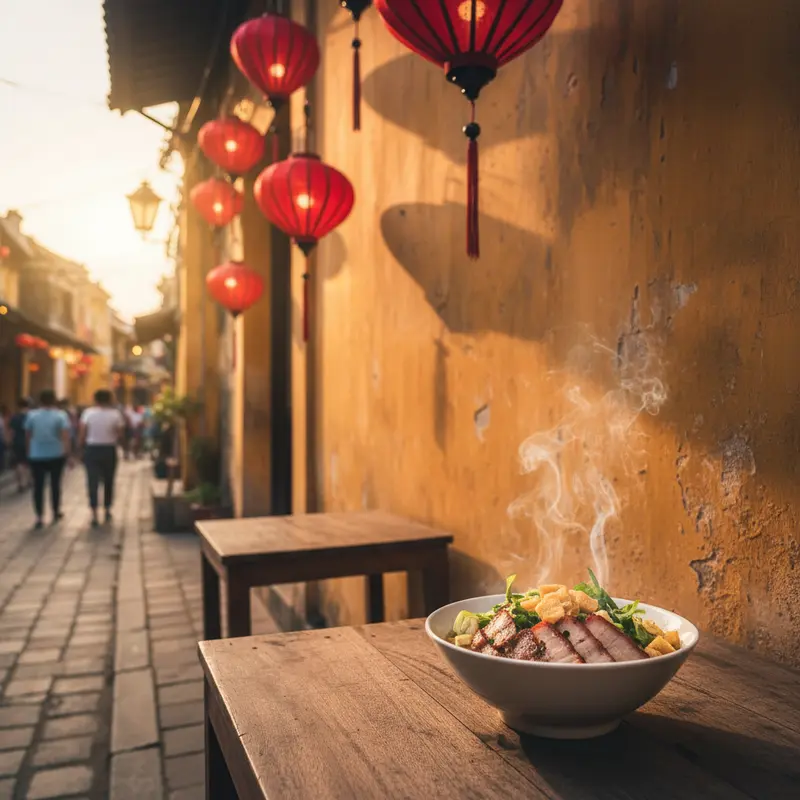
Cao Lau — the most distinctive Hoi An dish, only tastes good when eaten in Hoi An because it uses Ba Le well water and special wood ash to make the noodles. Find small shops in alleys near Hoi An Market, avoid tourist-facing restaurants on main streets.
Frequently Asked Questions
Frequently asked questions about Ancient Houses in Hoi An
What is the best way to use this guide to Ancient Houses in Hoi An: Stories in Wood?
Is Ancient Houses in Hoi An: Stories in Wood suitable for a first-time visitor?
Can I combine Ancient Houses in Hoi An: Stories in Wood with other nearby plans?
What should I confirm before making plans for Ancient Houses in Hoi An: Stories in Wood?
How can I avoid last-minute problems with Ancient Houses in Hoi An: Stories in Wood?
Tags
The Faifo Express
This article was written by the driver and travel consultant team at Faifo Express — over 5 years of experience in travel transport across Da Nang, Hoi An, and Hue. All information is based on real experience serving 5,000+ customers every month.
Related services
Airport Transfer
Hotel pickup, all-inclusive price
View DetailsDay Tour Car Rental
Ba Na Hills, Hoi An, My Son...
View DetailsShared Car
From just 100K VND/person
View DetailsTourist Car Rental
Explore the beauty of Central Vietnam with our private tourist car service.
View Details🛣️ Popular Routes


Follow Faifo Express
Get exclusive deals, real reviews and the latest Central Vietnam travel tips.
Faifo Express
Updates, customer reviews & real trip photos.
@trm.anh.travel
Real experience videos, Da Nang – Hoi An travel tips.
@xedichvudananghoianhue
Real videos of routes, fleet and transfer services.
@xedananghoianFE
Quick news, flash deals and direct interaction.
DM us on Facebook — response within 5 minutes