


Hoi An Night Market: How to Shop, Bargain and Eat Like a Local
📋 Table of Contents
Hoi An Night Market: Complete Guide From Someone Who’s “Lost” Here Dozens of Times
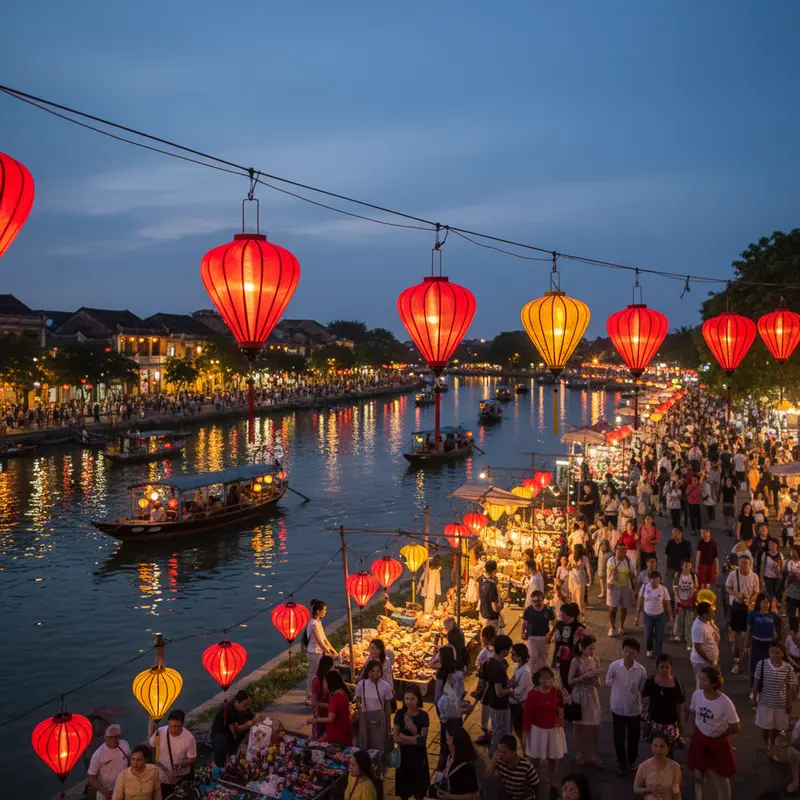
There are places where you only need to close your eyes and you can already hear them — the sound of grilled squid mingling with smoke, the murmur of haggling voices, red lantern light reflecting off the shimmering Hoai River. Hoi An Night Market is one of those places. It’s not the chaotic, crowded type of night market like many others — it’s something uniquely Hoi An: slow-paced yet captivating, ancient yet vibrant, enough to keep you wandering from 7 PM until midnight without wanting to leave. If you’re planning to visit the ancient town, this article is exactly what you need to read before stepping into that magical market — from shopping tips, the art of bargaining, to the “secret” dishes that only locals dare to recommend.
What Is Hoi An Night Market? History and Unique Characteristics Found Nowhere Else
From Trading Port to World-Famous Night Market
Hoi An was once one of Southeast Asia’s busiest trading ports in the 16th–17th centuries, where Japanese, Chinese, Portuguese, and Dutch merchants gathered to trade. That commercial DNA has seeped deep into every brick of the ancient town, and the night market is the most vibrant expression of that heritage in modern times.
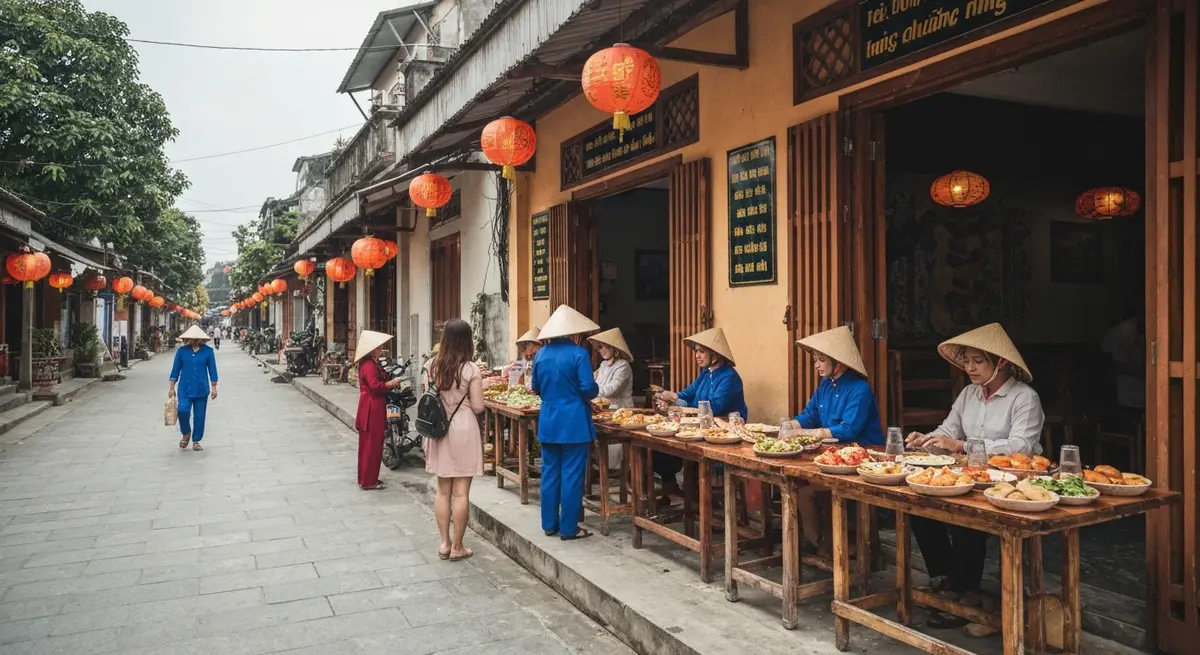
Hoi An Night Market is not a fixed market with a roof and walls as many people think. Actually, it’s a system of three main interconnected areas stretching along the Hoai River and surrounding streets:
- An Hoi Night Market (on An Hoi islet, across An Hoi Bridge): This is the most crowded area, specializing in handicrafts, clothing, lanterns, and souvenirs.
- Hoi An Central Market at Night (central market area on Tran Phu and Nguyen Hue streets): This area focuses more on local food and goods.
- Bach Dang and Nguyen Thai Hoc Walking Streets: Where artisans, street vendors, and street artists blend together.
What makes Hoi An Night Market completely different from Da Lat Night Market or Ben Thanh Night Market is the historical setting surrounding it. You buy a lantern while standing under a 300-year-old ancient house roof, candlelight flickering from surrounding shop houses. No backdrop could be more “authentic” than that.
Operating Hours and Seasonal Characteristics
The night market operates every day of the week, usually starting around 5:00 PM–6:00 PM and running until 10:00 PM–11:00 PM, sometimes later on weekends or during festivals.
Here’s something few people know: Full moon nights each month (14th lunar day) are the most special times. The entire ancient town turns off its electricity, lit only by lanterns and candles — called Ancient Town Night. The night market is twice as crowded, merchandise is more abundant, and the atmosphere is so mystical you’ll wonder what century you’re in. If you can choose when to visit, try to come on a full moon night.
Getting to Hoi An Night Market: Don’t Let “Taxi Fares” Ruin Your Trip
From Da Nang to Hoi An — Seems Close But Full of Surprises
The distance from Da Nang to Hoi An is only about 30km, but this is the stretch where many travelers get “overpriced” or encounter the most problems. Unlicensed taxis, unmetered motorbike taxis, Grab suddenly canceling rides during peak hours — these situations happen far more often than you’d think, especially when you want to return after 10 PM from the night market to your Da Nang hotel.
From my experience traveling this route many times: booking a complete car service with a professional company from the start is the smartest choice, both financially and for peace of mind.
Why Choose Faifo Express Instead of Taxi or Grab?
Faifo Express is a professional Da Nang – Hoi An shuttle service trusted by many travelers and locals, and I have specific reasons to recommend it:
First, drivers are local and know the terrain well. Faifo Express drivers are all locals who know every alley of Hoi An, including pickup/drop-off points near the night market that not everyone knows about. They can advise you on what time to go to avoid traffic, where to park for convenience.
Second, fixed prices with no overpricing. No “traffic surcharge,” “late night fee,” or “detour route” charges. You know the price before getting in the car.
Third, airport shuttle service combined. If you’ve just landed and want to head straight to Hoi An to catch the night market, Faifo Express’s Da Nang airport shuttle service is the optimal choice — the car waits at the arrival hall, no waiting time or haggling needed.
Fourth, advance booking available with flexible return times. After exploring the night market, you can text the driver to pick you up at your preferred time, no need to wave down a car in the middle of the night.
[!TIP] If you’re traveling in a group of 4 or more, booking a 7-seater with Faifo Express is often much cheaper than multiple Grab rides, plus it’s more comfortable since you have space for your purchases.
Other Transportation Options (And Their Drawbacks)
[!NOTE] Pricing Note for International Tourists The prices listed are inclusive of a 20% tax and service fee applied to foreign tourists. Estimated USD rates are based on current exchange rates and may slightly vary.
| Transportation | Estimated Cost | Advantages | Disadvantages |
|---|---|---|---|
| Traditional Taxi | 250,000–480,000 VND (≈$18)/way | Widely available | Easy to overcharge, no fixed price |
| Grab | 180,000–360,000 VND (≈$14)/way | Convenient app | Cancellations during peak hours, hard to book at night |
| Coach (fixed route) | 30,000–60,000 VND (≈$2)/person | Cheap | Inflexible schedule, inconvenient at night |
| Motorbike rental | 120,000–216,000 VND (≈$8)/day | Freedom | Dangerous if unfamiliar with roads, no parking in ancient town |
| Faifo Express | Fixed price, contact for quote | Safe, all-inclusive, local drivers | Requires advance booking |
[!NOTE] Hoi An Ancient Town has regulations restricting vehicles on certain streets from 8:00 AM to 11:00 PM. Faifo Express drivers know the nearest legal pickup/drop-off points to the night market, saving you extra walking time.
Experience Map: Where to Go, What to See, What to Do at Hoi An Night Market
Suggested Itinerary for a Perfect Evening
I’ve explored Hoi An Night Market more than 30 times, and here’s the itinerary I’d give to any first-time visitor:
5:30 PM – 6:30 PM: Start at the central Hoi An market area (Tran Phu street). This is when stalls are opening and it’s not too crowded yet — the perfect time to scout prices without rushing to buy.
6:30 PM – 8:00 PM: Cross An Hoi Bridge onto the islet. This is the “heart” of the night market with hundreds of stalls packed together. Spend time browsing handicrafts, trying on ao dai, choosing lanterns.
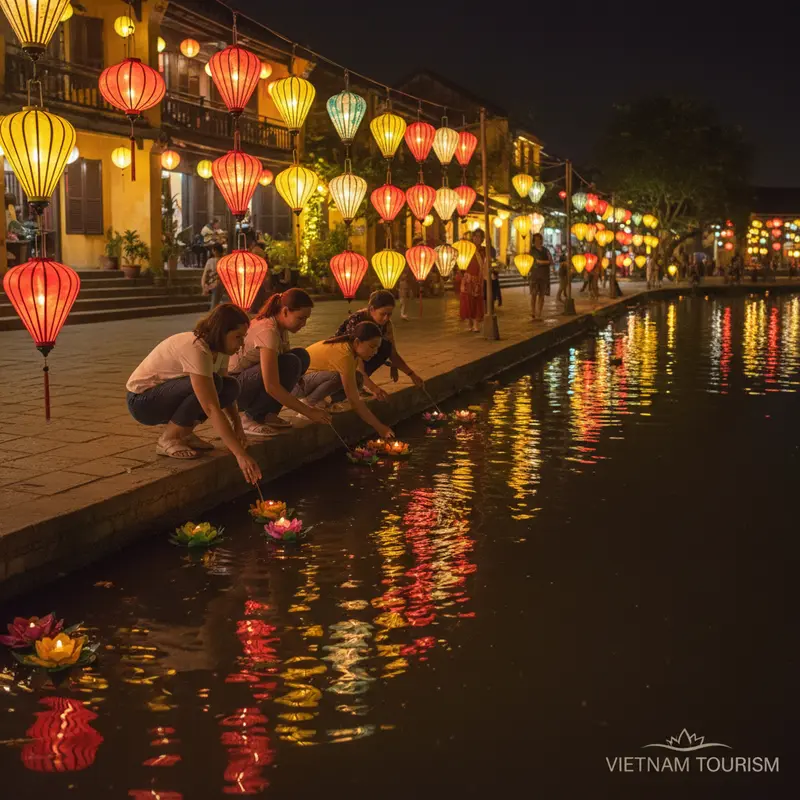
8:00 PM – 9:00 PM: Head to Bach Dang street along the river, float flower lanterns, watch artists paint, listen to street musicians.
9:00 PM – 10:00 PM: Have a late dinner at riverside restaurants or in small alleys around the market (more details on food below).
”Million-Like” Photo Spots That Few People Know About
Everyone photographs An Hoi Bridge, but here are some lesser-known angles that I guarantee will give you better photos:
- View from the start of Cam Nam Bridge looking toward An Hoi islet around 6:30–7:00 PM when lanterns are just lighting up: The entire night market reflected on the Hoai River, with sunset still lingering — this is the “golden hour” for photography.
- Small alley on Nguyen Thi Minh Khai street: There’s an alley densely decorated with lanterns from ceiling to floor, few tourists know about it, no crowds.
- Storefronts on Tran Phu street after 8:00 PM: When street lights dim, lantern light becomes the main source — the colors are incredibly warm and magical.
Shopping Experience at Hoi An Night Market: What to Buy, What to Avoid
Must-Buy Items
Hoi An is famous for traditional crafts, and the night market is where the best of these crafts are concentrated. Here’s a list of things truly worth buying — not Chinese goods in disguise:
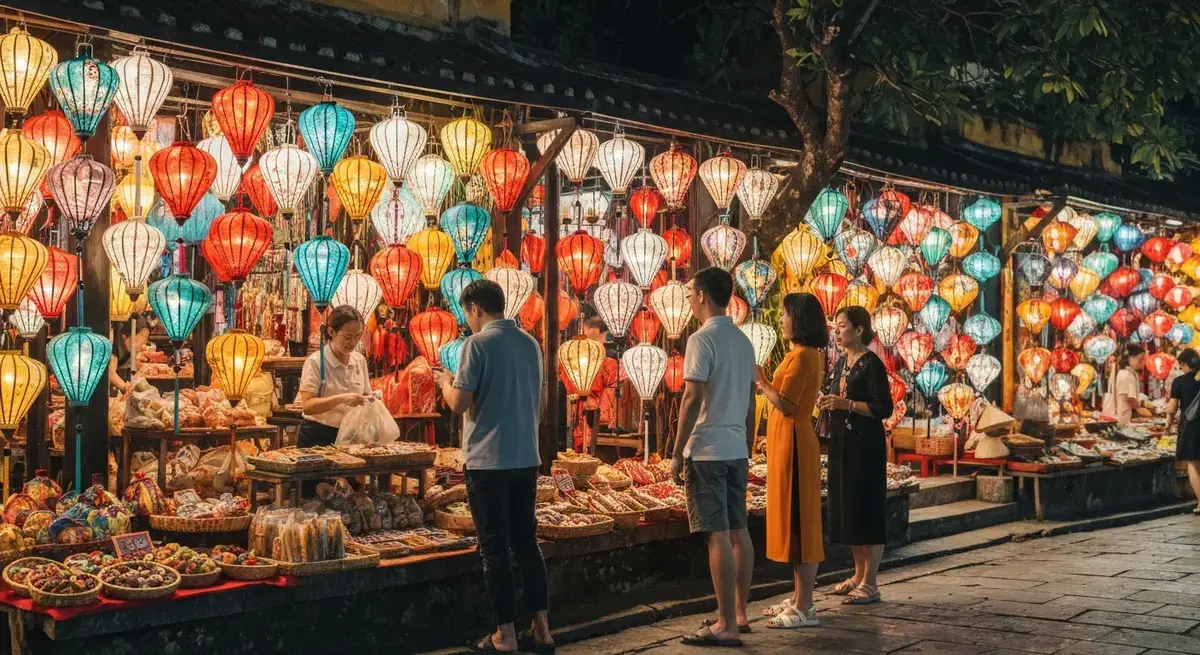
1. Hoi An Lanterns This is an unmissable symbol. Lanterns here come in two types: handmade silk and bamboo frame lanterns (more expensive, more beautiful, more durable) and mass-produced ones (cheaper but still beautiful as gifts). Prices range from 36,000 VND (≈$1) for small lanterns to 200,000–600,000 VND (≈$23) for large handmade ones.
How to distinguish real from fake lanterns: Real Hoi An handmade lanterns have hand-carved bamboo frames, skillful joints, fine silk fabric, and no wrinkles. Mass-produced lanterns usually have thin plastic or metal frames, thin fabric, and poor color durability.
2. Tailored Clothing and Fashion Hoi An has hundreds of tailor shops, and many night market vendors also take custom orders. However, at the night market you mainly buy ready-made clothes: ao dai, linen shirts, boho dresses, linen pants… Quality is quite good with reasonable prices if you know how to bargain.
3. Handicrafts from Wood, Copper, Ceramics Mother-of-pearl inlaid paintings, wooden sculptures, copper items, Thanh Ha ceramics — these are items with real artistic value. Don’t buy in a rush; ask the seller about origin and materials.
4. Bags and Handmade Accessories Rattan bags, fabric bags with ethnic patterns, bracelets, silk scarves — prices range from 60,000 VND (≈$2) to several hundred thousand dong.
[!WARNING] Be careful with items labeled “Hoi An silk” that are actually polyester fabric. Simple test: pull out a thread and burn it — real silk burns slowly, smells like burning hair, and extinguishes quickly; polyester burns fast, smells like plastic, and leaves hard residue.
Things You Shouldn’t Buy (Or Must Be Very Careful With)
- Lacquer paintings “copying” famous artworks: Many stalls sell lacquer paintings copying famous artists at “very cheap” prices — actually poor quality with no artistic value.
- Gemstones and jewelry: Unless you’re an expert, don’t buy gemstones at the night market — very hard to distinguish real from fake.
- “Brand name” electronics at cheap prices: No explanation needed.
The Art of Bargaining at Hoi An Night Market: Tips From a Local
Psychology of Haggling
Bargaining at Hoi An Night Market is an art and culture, not stinginess. Sellers know this, buyers know this, and both “play” by these unspoken rules. The problem is many travelers don’t know the rules, so they either overpay or bargain in a way that makes sellers unwilling to sell.
Golden Rule #1: Ask the price at least 3 different stalls for the same item before buying. Price differences between stalls can be 50–100%.
Golden Rule #2: Start bargaining from around 40–50% of the asking price (or the seller’s initial quote). This is a reasonable level — not so low it’s insulting, not so high you lose out.
Golden Rule #3: Act not too eager. If you pick something up, admire it, and say “oh how beautiful” with enthusiasm, you’ve lost your advantage. Pretend to be somewhat indifferent.
Golden Rule #4: Buy multiple items at once from one stall — this is the most effective way to get additional discounts. “Can I get a discount if I buy 3?” usually works better than haggling for each item separately.
Real Bargaining Scripts (Vietnamese and English)
Scenario: You want to buy a lantern, seller asks 180,000 VND (≈$7).
Step 1 – Ask for information: “What’s this made of? Silk or regular fabric?” (This question both gets information and shows you’re a knowledgeable buyer)
Step 2 – First offer: “Can you sell it for 72,000 VND (≈$3)?” (about 40%)
Step 3 – Negotiate: Seller usually comes down to 144,000 VND (≈$6). You shake your head, put it down, start walking away. 80% of the time they’ll call you back.
Step 4 – Close the deal: Usually settles somewhere around 80,000–120,000 VND (≈$5) — both sides happy.
With foreign customers, a magic phrase works very well: “I’m a student, can you give me local price?” — not dishonest, just strategy.
[!TIP] Never bargain with a disrespectful tone or say “it’s much cheaper somewhere else” in a critical way. Hoi An people are very proud and often refuse to sell to rude customers even if they offer higher prices. Keep a cheerful, smiling attitude — that’s your strongest weapon.
Hoi An Night Market Food: What to Eat and Where for the Right Experience
Top Must-Try Dishes
This is the part I’m most excited about writing, because the food at Hoi An Night Market is a separate world that many travelers only scratch the surface of.
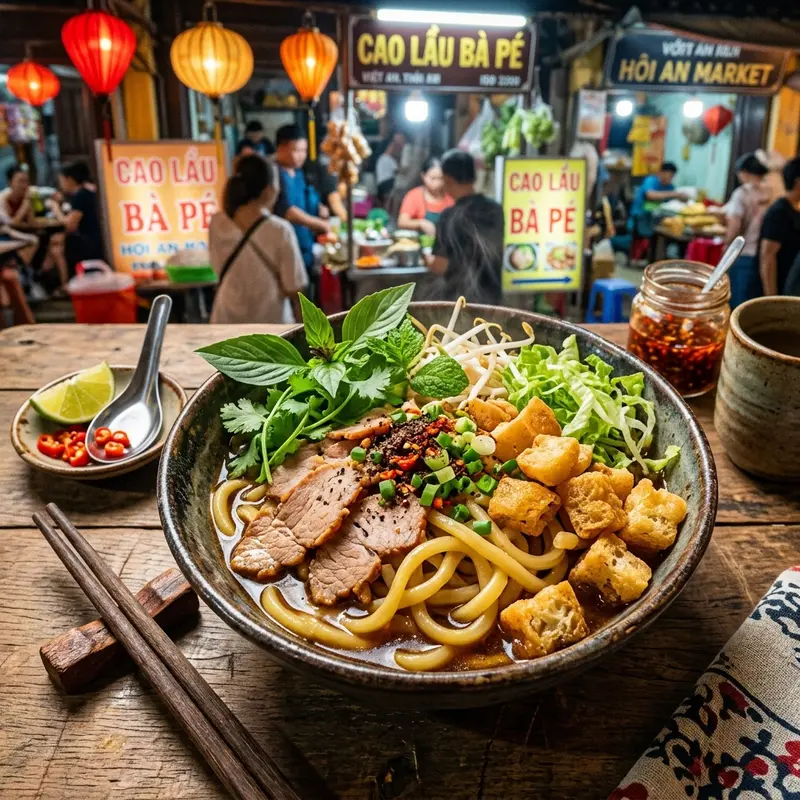
1. Cao Lau — The Soul of Hoi An Cao lau is a dish you can only eat in Hoi An because the water for making the noodles must come from the ancient Ba Le well. Cao lau noodles are thick, chewy, distinctive yellowish-brown color, served with char siu pork, crispy pork fat, and fresh vegetables. Price: 35,000–66,000 VND (≈$3)/bowl. Find it at the central market area or small shops in Tran Phu street alleys.
2. Hoi An Banh Mi Yes, Hoi An banh mi is different from Saigon or Da Nang banh mi. The crust is thinner and crispier, with special filling including distinctive pate, cold cuts, fresh herbs, and homemade chili sauce. Phuong and Madam Khanh are famous names, but I usually go to small unnamed banh mi carts at the corner of Phan Chau Trinh street — cheaper, no long lines.
3. Mi Quang Hoi An Different from Da Nang Mi Quang, Hoi An version usually has richer broth, fewer vegetables, often served with grilled rice paper. Price: 30,000–54,000 VND (≈$2)/bowl.
4. Fried Wonton This is a specialty found in few places — golden crispy wontons filled with pork and shrimp, served with sweet and spicy tomato sauce. Very common at stalls on An Hoi islet.
5. Hoi An Desserts After exploring the market, a bowl of corn pudding or bean dessert is what I always look for. Hoi An corn pudding is sweetly refreshing, with chewy corn kernels and rich coconut water — you feel refreshed after eating.
6. Mixed Clams / Clam Rice Few tourists know about this dish at the night market, but if you see a stall selling mixed clams, don’t miss it. Tiny clams stir-fried with fresh herbs, roasted peanuts, crispy rice paper crumbles — both unusual and addictive.
”Secret” Restaurants Only Locals Know
Unnamed pork organ congee stall — Hoang Dieu street: Opens from 7:00 PM, only sells pork organ congee and chicken congee. Plastic tables and chairs, no menu, no English, no WiFi — but the congee here is one of the things I miss most about Hoi An. Price: 30,000 VND (≈$1)/bowl.
Banh Xeo (sizzling crepe) with shrimp and pork cart — corner of Nguyen Thi Minh Khai street: The owner starts pouring crepes around 6:30 PM, usually sells out before 9:00 PM. Small, crispy crepes, rolled with fresh vegetables and tangy fish sauce dip. 5 crepes for 24,000 VND (≈$1).
[!WARNING] Avoid restaurants with people standing outside “pulling customers” by handing out English menus with prices in USD. These usually charge 3–4 times more than local restaurants with quality that doesn’t match the price. Asking locals or asking your Faifo Express driver for recommendations is the safest way.
Frequently Asked Questions
Frequently asked questions about Hoi An Night Market
What is the best way to use this guide to Hoi An Night Market: Shopping, Bargaining & Dining?
Is Hoi An Night Market: Shopping, Bargaining & Dining suitable for a first-time visitor?
Can I combine Hoi An Night Market: Shopping, Bargaining & Dining with other nearby plans?
What should I confirm before making plans for Hoi An Night Market: Shopping, Bargaining & Dining?
How can I avoid last-minute problems with Hoi An Night Market: Shopping, Bargaining & Dining?
Tags
The Faifo Express
This article was written by the driver and travel consultant team at Faifo Express — over 5 years of experience in travel transport across Da Nang, Hoi An, and Hue. All information is based on real experience serving 5,000+ customers every month.
Related services
Airport Transfer
Hotel pickup, all-inclusive price
View DetailsDay Tour Car Rental
Ba Na Hills, Hoi An, My Son...
View DetailsShared Car
From just 100K VND/person
View DetailsTourist Car Rental
Explore the beauty of Central Vietnam with our private tourist car service.
View Details🛣️ Popular Routes

Follow Faifo Express
Get exclusive deals, real reviews and the latest Central Vietnam travel tips.
Faifo Express
Updates, customer reviews & real trip photos.
@trm.anh.travel
Real experience videos, Da Nang – Hoi An travel tips.
@xedichvudananghoianhue
Real videos of routes, fleet and transfer services.
@xedananghoianFE
Quick news, flash deals and direct interaction.
DM us on Facebook — response within 5 minutes